Preparation
Another day passes, heavy with sunlight and the smell of earth warmed by the heat. I rise early and make my way to join Chipiri. As I see him, he is already moving through the village with calm determination. The villagers are scattered across the fields, repairing fences, carrying baskets of grain, and checking the water channels, but Chipiri is the quiet center of it all. I follow him as he stops to help where he can. He does not speak much, yet his presence guides the work around him, and everyone seems to appreciate his presence and the help he can bring.
Today, our task is simple. Chipiri and I will visit an old fisherman and repair a wooden paddle that has been broken. Apparently, the fisherman lodged his paddle near a water mill under construction. When he tried to free it, the wood splintered, and he could only stop fishing for the day. As I look at the man, I see how his back is bent with age and fatigue. The fisherman does not complain about the situation of the water mills rising along the river of Gungara. Still, I see it in his eyes. There is exhaustion, frustration, and a kind of quiet despair that speaks louder than words. Chipiri notices it too. He approaches the fisherman with a gentle nod, his hands steady as he takes the splintered paddle.
“We will fix it,” he says simply, his voice calm and low. I can tell he feels the weight of the man’s difficulties imposed by the new mills, which makes the fish run away to faraway areas. Yet, Chipiri keeps his temper and starts to measure the length of the broken handle, checking the angles, and offering small suggestions without ever belittling the fisherman. There is patience in his every move.
I kneel beside him, offering nails and scraps of wood, and we begin working together. The sun beats down, and sweat drips into my eyes, but I hardly notice. My attention is on the rhythm of the task, the way Chipiri moves around the fisherman, checking the work without fuss. The old man eventually sighs, a small smile breaking through his fatigue. His eyes meet Chipiri’s, and for a fleeting moment, the sorrow in them softens. Chipiri nods with contentment and returns to his work.
Watching him, I feel a strange mixture of admiration and unease. He carries the burdens of this village and others around. But, he bears them with a quiet dignity that seems almost unnatural, as if he were made to hold responsibility without breaking. I know some of this weight is his own, tied to his past and the shadows of royal blood, but he does not let it show in moments like this. Even in the heat, even under the silent complaints written in every line of the fisherman’s face, Chipiri moves as if he is exactly where he should be, doing exactly what must be done.
By the time the paddle is fixed, smooth and solid once more, I realize that the old man’s hands are less trembling, his eyes lighter. He thanks us quietly as we move back to the center of the village. Soon, Nyore, Chipiri, and I are eating a warm meal inside a hut, another day behind us.
I do not wait long to join the bunk Nyore’s made for me and sleep a little. I know me. In two to three hours, I will wake up, unable to sleep peacefully for long periods.
The night is still as I feel my eyes waking up on their own. Two minutes later, I am stepping out of Nyore’s hut, careful not to wake her. The cool air of the outside brushes against my skin. My mind is restless, tangled with images of Nyasha, the protests, and the endless questions that refuse to settle. I move toward the grove where I often meditate, seeking Yulin’s presence. The moon hangs high, its pale light spilling across the fields, but as I sit on the familiar rock and call to the spirit, nothing answers. Yulin remains distant, silent, leaving me with the echo of my own restless thoughts.
I do not linger long after the meditation ends. There is no guidance tonight, no reassurance, and the silence only amplifies the weight in my chest. I rise and begin walking back toward the village, my footsteps slow and careful over the uneven ground. Suddenly, I hear something different from the usual insect life of the night: a whisper of movement that does not belong to the wind. My senses sharpen, every nerve alert. Someone is out here, not far from where I am.
I follow the sound, cautious and quiet. My progress stops when I reach the edge of a large field belonging to Tonderai, the Fields Advisor of the king. The moonlight reveals shapes moving in the distance. As I step closer, I realize that the figures are women, bending low and carrying small sacks and baskets. Their movements are deliberate and careful. They are silent, speaking only in whispers. They seem to be coordinating their efforts with subtle gestures and nods. I catch my breath and try to understand the situation. After some time and observation, all becomes clearer. Those women are redistributing the granaries, moving the grains quietly from one storage to another. Acting in the night must be a necessity if they want to hide from Tonderai’s assistants. If I am not mistaken, those assistants should come tomorrow morning at sunrise to collect the exact amounts of grain for the city of Gungara. I now understand what they are doing, but I am still not sure if it is a good thing. What is their purpose?
I keep watching them work, almost mesmerized. Their faces are tense with concentration, but there is a spark of determination in their eyes that refuses to be dimmed. Some women crouch near shared grinding stones, passing small portions to each other; others linger near water points, exchanging hushed instructions about who needs what, who has too little, who has too much. They have created a whole organization. It seems to be a kind of lifeline for widows and families with too many children who would otherwise go hungry. I heave with relief. What those women are doing is definitely something good for the village and its people. Most of all, they have a strong sense of courage. This is not easy to defy one of the king’s advisors. Sometimes, quiet and careful ways resonate more strongly than any sword or shield ever could. I am amazed by those women.
Getting closer to some of them, I tend my ear to listen to what they are whispering in the night. “The children near the east bank didn’t get enough last week. We’ll hide a large bundle of this for them,” one says. Another replies, her voice barely audible, “Make sure no one notices. Tomorrow they’ll take counts. We can’t be caught.” I inch closer, careful to remain hidden, and catch another fragment of conversation.
“We can’t stay silent anymore,” a woman murmurs, her tone low but firm. “The king and his advisors think we are weak. That we will just bow and let the grain be taken while they beat the people we respect the most, like Nyasha…” As she pronounces her name, no woman answers for some time. Soon, the same woman speaks again, “She was always there for us villagers, even though we did not live in Gungara. Her healing was the best we ever received.”
A pang of grief and reverence hits me. Nyasha. Even here, far from the heart of Gungara, her presence lingers, her legacy alive in these quiet acts of defiance.
“She came to us often,” another woman whispers, her voice trembling slightly, “healing the sick, tending the injured, even when we had no way to repay her. She never turned anyone away, not even those who had nothing.”
A third woman steps forward, her face briefly illuminated by the moon. “She reminded us that even small acts of care can make the world better. Now we must, like her, do what we can to help those who cannot help themselves.”
I feel admiration rising in me, a warmth that spreads from my chest to my fingers. These women, working in the shadows, risking punishment, are fighting in the only way they can. There is no sword, no shield, no army. Instead, they fight with what they have: ingenuity and solidarity.
However, the tension in their voices betrays the fear beneath their determination. They whisper about Gungara’s protests and all the anger that simmers in the streets. Sadly, I cannot help but witness how they speak about it, like a distant storm that they have no possibility of facing openly, but can just go through. “We cannot act,” one says softly. “We are not trained, not strong enough to fight. But we can feed those who are weak. We can give them a chance to survive another day.”
I remain hidden, heart tight with both sorrow and awe. The women move with a fluid precision, passing grain from one sack to another, whispering names and numbers. In this instant, I realize that I am witnessing something extraordinary. It is the quiet strength of women who refuse to bow completely, who resist tyranny in the only ways they can. They remind me of the fire that still burns in this land, of the small acts that matter even when the world seems broken. Their solidarity is a force unto itself, and I cannot help but feel a surge of respect and inspiration.
As the moon shifts in the sky, the women finish their tasks and melt back into the shadows, leaving the granaries carefully arranged, the hidden stores in place. I watch them disappear into the night.
I linger for a moment longer, letting the night hold me as I think of my place in all of this. What should I do? Where do I fit? I am not sure…
The morning after witnessing the women in Tonderai’s fields, the air in the village felt different. There was a quiet hum of determination that lingered among the huts and small paths. As if the soil itself had absorbed the courage of those women and carried it forward. Nyore sat outside her hut, her eyes focused on the distant horizon where Gungara’s towers rose like shadows in the haze. I approached quietly.
“Xia,” she said, without looking up, “you saw them last night.”
I nodded slowly. “They are brave, Nyore. They take what they can, give what they must, even when the risk is great.”
Nyore turns to me, her eyes sharp, yet soft. “Survival is always part of the lesson. You cannot prevent all pain, Xia. But you can give those women the strength to face it even more fiercely than they already do. What you teach them, even a little, may change many lives.”
I am not surprised by the direction our conversation has taken. Nyore will not let me grieve Nyasha peacefully. She thinks I should train the women who wish to with weapons. She thinks that helping these women learn how to fight will allow them to struggle in different ways. Some part of me agrees with her. I was reluctant until today to accept her idea. I did not wish to help those women learn how to kill with weapons. Because learning one way invites the other: learning how to get killed by weapons…
I have spent years learning how to fight. My skills are honed from careful operations and precise movements, yet I had never thought of applying them in this way. Here, in the villages surrounding Gungara, there is no formal army, no organized militia, only people whose lives are threatened by power and injustice. And now, there are those brave women who wish to become the first step of a shield for those most vulnerable. At least, this is what Nyore often tells me.
The thought lingers in my mind long after our conversation, growing clearer with each passing day: the fight does not always happen in the streets or on battlefields. Sometimes, it starts quietly, in hidden corners, with those who dare to learn.
Finally, one afternoon, I join Nyore as she cuts some wood for the evening fires and accepts her idea. I will do it. I will do my best to train the women who are willing to learn how to fight.
Nyore’s plan to invite women to come at night and learn fighting with me is as subtle as it is efficient. She moves quietly, speaking from woman to woman, weaving her message through the village like threads in a tapestry. Everyone knows and respects her, so if she wants to spread news with discretion, it will never be a problem. Her invitation is simple: a night gathering for training. It must remain discreet and hidden and is reserved for the women who wish to learn the art of weaponry. Many women consider Nyore’s invitation attentively. They do not know how a woman could learn how to fight, but they trust Nyore and do not doubt her proposition. If she is inviting them, she has already found a solution.
By the first evening of training, twenty women gather in the soft shadow of the woods, near the edge of the village. They arrive in pairs, then in trios, silently, hiding themselves from any wandering eyes. They are mostly young, unmarried women, those whose responsibilities do not anchor them to a household or child. Nyore introduces them to me simply: “They are ready to learn. They trust you.”
I take a deep breath and step forward. “Good evening, everyone. Perhaps some of you have recently seen me helping Chipiri, but I guess that most of you don’t know me. I think you do not need to. This is not very important. All you must know is that life has guided me in your village, and I am thankful for that. Now, I wish to repay you and help you as I can. And there is one thing I am not too bad at: fighting. I was not born in your Kingdom. This is why I had the possibility to learn how to use weapons even though I’m a woman.” I stay silent for a second, trying to figure out how to conclude my presentation. Only one thing seems to make sense, so I trust my instinct and resume, “Learning how to fight is hard, and we do not have much time. You must not miss one lesson if you wish to improve. Every move counts, every lesson matters. Position yourselves in lines and keep an arm’s distance between all of you. We will begin.”
As I finish my speech, I observe their faces. They seem to be content, I was not so bad then… Something else is clear and distinct in their eyes: eagerness. Those women are here for a reason. This is good. With such a spirit, they will be quick learners.
The first night of training is a careful harmony between instruction and observation. I teach them how to move, how to position their feet, and how to shift their weight to maintain balance. Their bodies are flexible and wishful, but they lack the instinct for combat that years of experience have given me. I must start with the simplest lessons: how to hold a stick, how to anticipate an opponent’s movement, how to keep calm under pressure.
Over the next few weeks, a rhythm develops. We divide the women into two groups: one group trains on the first night, the second on the following night, followed by a break on the third night. Each session lasts three hours, beginning quietly after the families sleep and ending before the village stirs. The schedule allows for recovery, practice, and reflection, and it ensures that the men of the village do not notice what is going on. I watch, guide, correct, and encourage them. It is tiring for me as I must give my all for each session. I represent some hope for these women, so I must not let them down. Yet, I do not feel frustrated. It is quite the contrary. My efforts and tiredness seem to be rewarded as I witness the women slowly but surely transforming their skills for fighting.
On the other side, the city of Gungara roils in turmoil during those weeks. News arrives sporadically of uprisings and protests. The king’s advisors push harder, Tonderai’s water mills press forward, and the soldiers are everywhere. And yet, in our village, the women train in the shadows. The contrast is stark: chaos inside the city, order and preparation outside. The women’s determination becomes a discreet rebellion, organized, deliberate, and secret.
After one month, I decided that both groups were ready to train with real weapons. However, one problem presents itself: we lack weapons. An effective weapon made of steel is expensive because it uses dense and sharp metal. There is only one solution I can think of: we must steal weapons in Gungara with the best students I have. And so, I select three women for the task. They are the strongest, the quickest learners, and the most observant. During our night of break with no lesson, I led the three women and myself toward a tiny guardhouse near the entry to Gungara. We move like shadows, hearts pounding in unison.
At the first sight of a guard, I stand aside and let them practice. At first, the three women hesitate. It does not last for long. Soon, they manage to execute what we have practiced: silent steps, precise strikes, coordinated movement. One of them carries a quick, calculated knock that leaves the guard before the door unconscious without raising an alarm. He is the only one awake, as the other two are sleeping. In no time, the three women’s faces shine with a mixture of adrenaline and awe. They have done it. They have succeeded.
Only then do we slip fully into the guardhouse. Inside, lined neatly against the walls, are spears left for backup in times of urgency. Resting nearby are several round wooden shields, stacked carelessly, their surfaces marked by old impacts and wear. I crouch with the women at the doorway, pointing to the weapons.
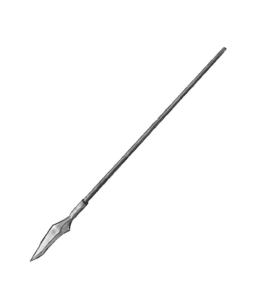
“They are simple but effective. Spears and shields. They were made to be used together.” I pick up a spear and hand it to the nearest woman. “Notice the balance. The shaft is mopane wood, durable and smooth. The blade is narrow, precisely pointed, designed for piercing.” Then I lift a shield and place it against her forearm. “This is not just protection. It guides your movement. Your spear strikes, your shield answers.”
They examine the weapons with wide eyes, tentative fingers brushing the smooth wood of the shafts, the sharp, leaf-shaped metal tips, the rough grain of the shields. I can see the thrill of potential and the fear of failure in their expressions.
“Take only what we need,” I remind them. “Move quietly. Stay aware. If we meet guards on our way back, one at a time. No mistakes.”
They nod. We leave the guardhouse without a sound and return to the village, hiding the spears and shields in clever spots where no one could find them. That night, we all fell asleep with a light sense of accomplishment.
As planned, the next two weeks are consumed with training. Now that we have real weapons, we must use them properly. And so, we work with spear and shield together. Our lessons focus on control, thrusts, blocks, positioning, and recovery. I teach them how to let the shield lead, how to strike from behind its cover, how to move as a single, balanced form rather than two separate tools. Every movement has a purpose.
I push them hard, correcting every mistake, but always with encouragement. Slowly, the women become autonomous, confident in their abilities and in each other. They learn not just how to fight, but how to protect.
Throughout this time, Nyore remains a quiet observer, her dignified presence a stabilizing force. Occasionally, she offers guidance in her soft voice or shares a story of past struggles and survival, always reminding the women that their training is not only about physical skill, but about courage, solidarity, and the weight of responsibility.
One night, as the women practice under the pale moonlight, I see Nyore at the edge of the training ground. “They are learning quickly,” I say, a smile tugging at my lips. “They will be ready soon. Maybe sooner than I expected.”
Nyore’s eyes reflect the moonlight, glinting with quiet approval. “This is only the first step, Xia. You know that. Even if they can fight, even if they can defend themselves… There will be more to come.”
I nod, the weight of her words settling into my chest.
By the end of the two months, the women move with precision and awareness, capable of defending themselves and each other. They have become more than learners. They are guardians in their own right, autonomous and ready to act if the need arises. I watch them, pride and concern mingling in my chest. I hope from the bottom of my heart that I was not mistaken. I hope this will help those women have a better life rather than make it shorter than it was supposed to be.
I return to Nyore’s hut that night, exhausted, my mind still replaying the moments of training, the eyes of the women, the feeling of their determination in my hands as we practice spear work. While I reach her hut, I see that Nyore is waiting for me. Her expression is serene and serious at the same time.
“They are ready, Xia,” she says softly. “Now, we will see how we can put all those lessons into practice.”
Nyore’s gaze softens, and she places a hand on my shoulder.
The night wraps around us like a protective blanket, the distant city murmuring in unrest while our village holds its breath in careful, quiet preparation. And for the first time in a long while, I feel a measure of hope. A fragile one for sure, but hope nonetheless.
These women have come so far, and in only one month of intensive practice with the spears, they are nearly prepared for our first mission. I run through the plan in my mind, weighing every risk, every potential misstep. At this rate, I realize that we will be ready to launch the operation in just a day or two. Very soon, the village’s finest secret women warriors will face the garrison where many people are imprisoned because they simply shared their worries and injustices after Nyasha’s unfair and horrible death.
…
And so, two days later, under the cover of night, the twenty best women are gathered. Their spears glint faintly, their shields are close and steady against their torsos. They are ready to face the garrison and aid the many women and the few men who have dared to rise in protest after what happened to Nyasha. Altogether, those twenty brave women and I are prepared to strike back. This first mission will determine many things. I can only wish for our success and safety. May Yulin protect us during this night of sincere willingness and decisive action.
Next chapter
16 - Operation